Access and isolation
Role-based permissions govern access to data, processes and tools. Fail-closed row-level security isolates client data, while query SQL runs through a read-only, least-privilege role.

Corlogic combines StarEngine, which turns warehouse data into a governed business model for supported answers, with a process runtime that coordinates work across people, configured AI agents and connected systems.
StarEngine organizes relevant warehouse data into a governed star model of facts, dimensions, relationships and business definitions.
Revenue, for example, can mean gross sales, recognized revenue or net revenue after returns. StarEngine records which definition applies and how it should be calculated. It validates the model against the underlying data before an approved version can serve questions.
StarEngine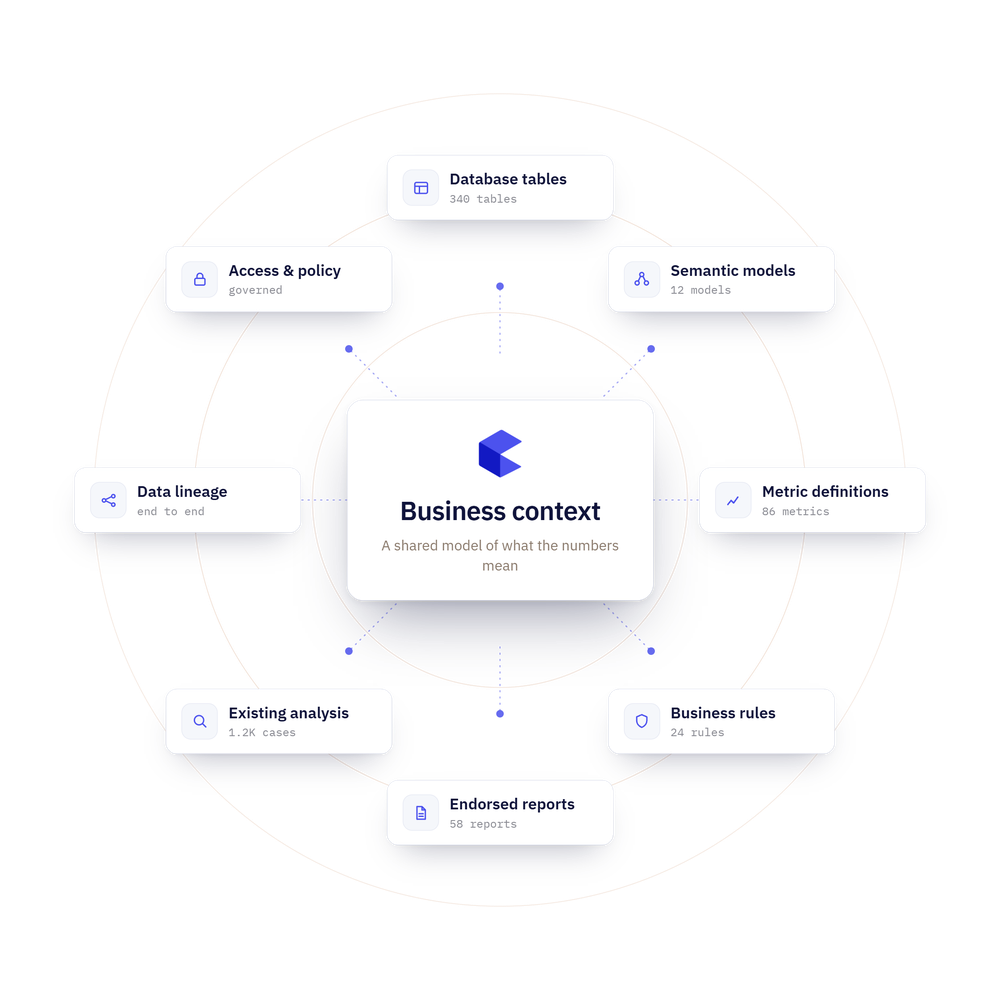
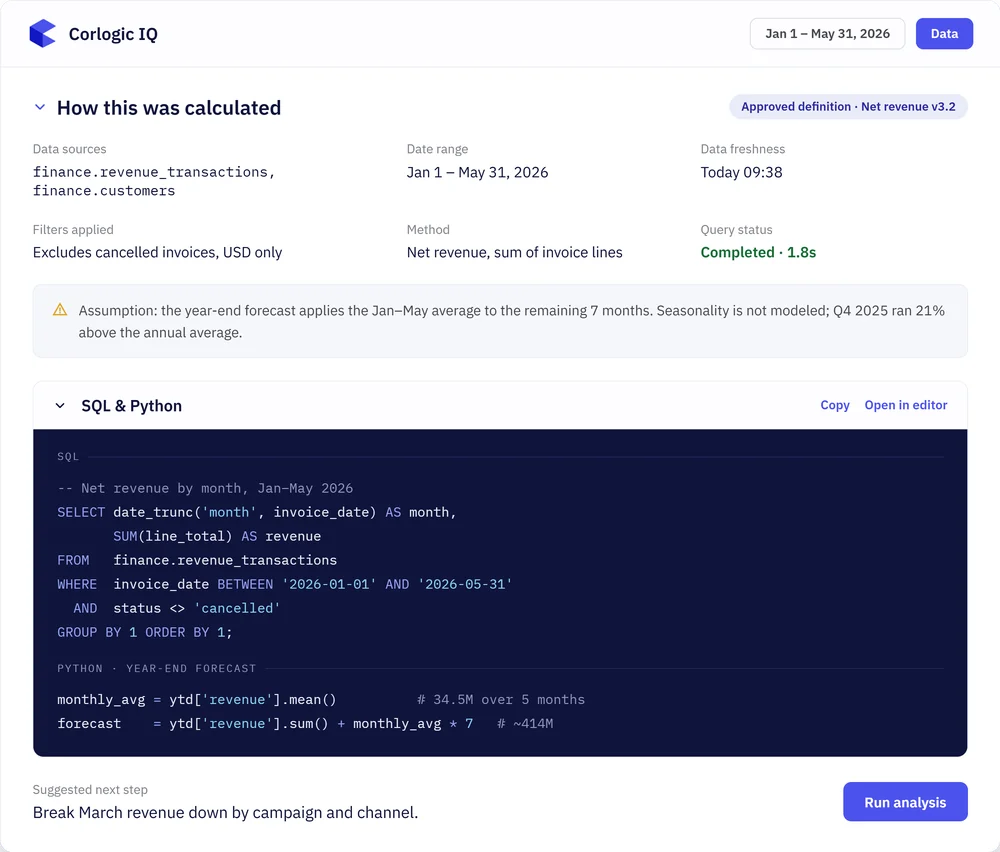
A language model interprets the question as a structured request against the approved StarEngine model. The remaining query path is deterministic: Corlogic applies the defined business logic and compiles exact, read-only SQL.
Teams can inspect the interpretation, SQL and model version. If the model cannot support a question, Corlogic gives a specific reason instead of filling the gap with a guess.
Corlogic moves work through tasks, gateways, events and DMN decision tables. Processes can be imported and exported as BPMN 2.0 XML for use with compatible modeling tools.
Steps can involve people, configured AI agents or connected systems. The runtime preserves state through approvals, timers, retries and exceptions. RACI-based routing, message correlation and compensation support responsibility and continuity across long-running work.
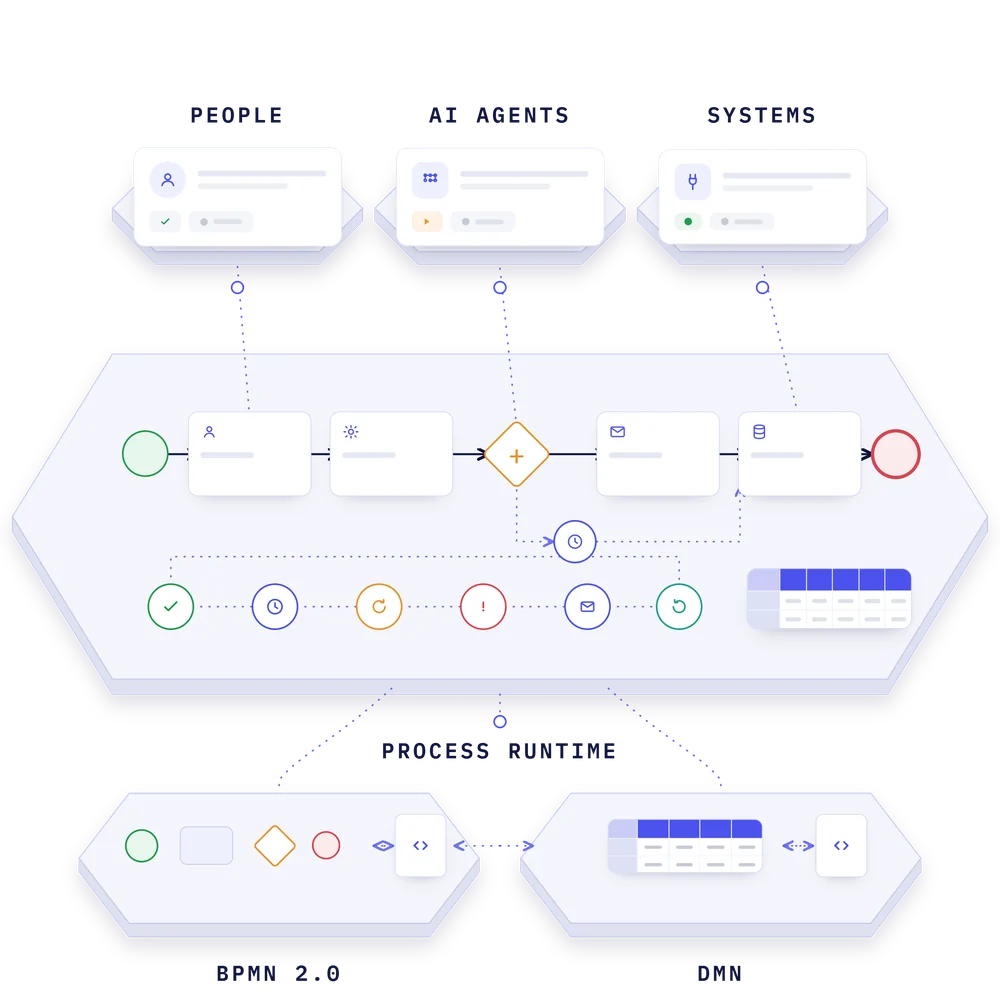
Each agent has defined instructions, an approved model, permitted tools and a required output. A process step can narrow those tools further. Corlogic supports selected external model providers and compatible self-hosted endpoints.
Role-based permissions govern access to data, processes and tools. Fail-closed row-level security isolates client data, while query SQL runs through a read-only, least-privilege role.
The privacy gateway tokenizes sensitive values before an external model call, limiting the personal data exposed outside the controlled environment.
Actions are recorded for review. Correlation IDs, OpenTelemetry traces, operational metrics and health checks make system activity visible.
Corlogic connects to enterprise databases, REST APIs and OLAP/XMLA sources, and works with operational tools through webhooks, MCP and configured communication channels. Our engineers fit the model and processes into the client’s existing environment.
| Data sources | Enterprise databases, REST APIs, OLAP/XMLA sources |
|---|---|
| Operational tools | Webhooks, MCP, configured communication channels |
| Process models | BPMN 2.0 XML import and export, DMN decision tables |
| AI models | Selected external model providers, compatible self-hosted endpoints |
| Procura360 works with | SAP, Microsoft Fabric, Microsoft Graph, Active Directory |
StarEngine is the part of Corlogic that organizes relevant warehouse data into a governed star model of facts, dimensions, relationships and business definitions. It records which definition of a measure applies and how it should be calculated, and it validates the model against the underlying data before an approved version can serve questions.
A language model interprets the question as a structured request against the approved StarEngine model. The rest of the query path is deterministic: Corlogic applies the defined business logic and compiles exact, read-only SQL. Teams can inspect the interpretation, the SQL and the model version.
Corlogic gives a specific reason instead of filling the gap with a guess.
Yes. The process runtime moves work through tasks, gateways, events and DMN decision tables, and processes can be imported and exported as BPMN 2.0 XML for use with compatible modeling tools. The runtime preserves state through approvals, timers, retries and exceptions.
Each agent has defined instructions, an approved model, permitted tools and a required output. A process step can narrow those tools further. Corlogic supports selected external model providers and compatible self-hosted endpoints.
Role-based permissions govern access to data, processes and tools. Fail-closed row-level security isolates client data, and query SQL runs through a read-only, least-privilege role. A privacy gateway tokenizes sensitive values before an external model call. Actions are recorded for review, with correlation IDs, OpenTelemetry traces, operational metrics and health checks.
Corlogic connects to enterprise databases, REST APIs and OLAP/XMLA sources, and works with operational tools through webhooks, MCP and configured communication channels.
Talk to us about your data, security requirements and processes.
Talk to us